


 Send Inquiry
Calcium Carbonate for Sealants
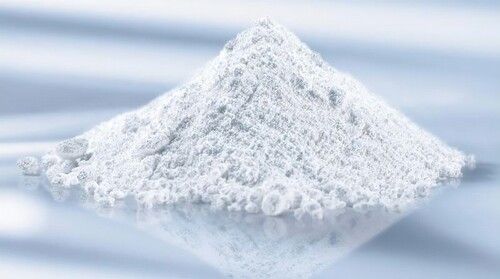

Calcium Carbonate for Sealants Specification
- Melting Point
- 825C
- Density
- 2.7 Gram per cubic centimeter(g/cm3)
- Chemical Composition
- Calcium Carbonate > 98%
- Application
- Widely used in sealants as a filler and pigment
- Water Absorption
- Very low
- Hardness (%)
- Mohs hardness: 3
- Surface Finish
- Smooth, enhances surface finish of sealants
- Usage & Applications
- Sealants, adhesives, construction materials
- Purity(%)
- 98% minimum
- Form
- Powder
- Product Type
- Mineral filler for sealants
- Shape
- Powder or granules
- Porosity
- Low
- Dimensional Stability
- High; maintains sealant structure
- Strength
- Contributes to improved compressive strength in sealants
- Specific Gravity
- 2.7
- Thermal Conductivity
- Low
- Color
- White
- Compatibility
- Compatible with most polymers and binders used in sealant formulations
- Packaging Type
- HDPE bags, 25kg/50kg
- Moisture Content
- Maximum 0.5%
- Shelf Life
- 12 months from manufacturing
- Whiteness
- 92% minimum
- Toxicity
- Non-toxic, environmentally friendly
- Odor
- Odorless
- Oil Absorption
- 22-28 g/100g
- Particle Size
- 1-40 microns (as per requirement)
- pH Value
- 8.5-9.5 (in 10% slurry)
About Calcium Carbonate for Sealants
Calcium Carbonate for Sealants A sealant is a material designed only to fill up a space. The spaces can be joints, gaps or cavities that occur between two substrates.Shivish Microns LLP Ground Calcium Carbonate is widely used in adhesives, caulks and sealants applications as a rheology modifier, cost-reducing filler, tensile strength enhancer, toughening agent, opacifier and/or whitening agent. Shivish Microns LLP manufactures four types of minerals used in adhesives and sealants. They range from inexpensive Ground Limestone (Calcium Carbonate) fillers that reduce costs to Talc that contributes to impermeability and chemical resistance. Each mineral contributes in the successful application and performance of sealants and adhesives. Please contact us for more details and to get the related Calcium Carbonate TDS
Enhanced Performance for Sealant Applications
Calcium Carbonate is crucial in improving both the physical and chemical attributes of sealants. Its high purity and controlled particle size boost compressive strength, while low moisture and oil absorption ensure formulation stability. This material also delivers superior whiteness and smooth surface finish, enhancing aesthetic and performance aspects in various sealant systems used across construction and manufacturing industries.
Reliable Quality and Safe Handling
The product's non-toxic, odorless nature makes it safe for industrial use while complying with environmental standards. Rigorous quality controls during manufacturing ensure high purity (minimum 98%), low porosity, and consistent chemical composition. Packing in durable HDPE bags preserves its integrity and extends shelf life, providing reliability for suppliers and end-users alike.
FAQ's of Calcium Carbonate for Sealants:
Q: How does Calcium Carbonate improve the performance of sealants?
A: Calcium Carbonate enhances sealants by acting as a high-strength filler and whiteness pigment. It improves compressive strength, dimensional stability, and surface smoothness, resulting in durable and visually appealing sealant applications.Q: What is the recommended usage process for Calcium Carbonate in sealant formulations?
A: It is typically blended into the polymer or binder matrix during the manufacturing process, using specified particle sizes to meet formulation requirements. The material disperses easily in slurry form due to its controlled pH and ensures uniformity in the final mixture.Q: When should Calcium Carbonate be added to the sealant mix?
A: It is best incorporated during the initial mixing phase, allowing for thorough dispersion and optimal integration with polymers, binders, and other ingredients. Early addition ensures improved strength and stability in the finished sealant product.Q: Where is Calcium Carbonate supplied from and how is it packaged for use?
A: Calcium Carbonate is manufactured and supplied in India, available for export and distribution. It comes securely packed in HDPE bags of 25kg or 50kg, preserving quality and making it convenient for transport and storage.Q: What are the long-term benefits of using this material in sealants?
A: Consistent use of Calcium Carbonate provides enhanced compressive strength, maintains structural integrity over time, and contributes to improved dimensional stability and surface finish in sealant applications. Its purity and compatibility with most polymers also ensure formulation reliability.Q: Is Calcium Carbonate environmentally friendly and safe for handling?
A: Yes, it is non-toxic and odorless, meeting strict environmental and safety standards. This makes it suitable for various industrial settings where safe handling and sustainable practices are a priority.Q: What types of sealant and adhesive applications is Calcium Carbonate suitable for?
A: Its adaptability and compatibility with diverse polymers and binders make it ideal for use in construction sealants, adhesives, and other building materials, providing necessary filler and pigment properties that support a wide array of formulations. Get Latest Price
Tell us about your requirement

Price:
Quantity
Select Unit
- 50
- 100
- 200
- 250
- 500
- 1000+
Additional detail
Mobile number
Email


Shivish Microns LLP
All Rights Reserved.(Terms of Use)
Developed and Managed by Infocom Network Private Limited.
Developed and Managed by Infocom Network Private Limited.

